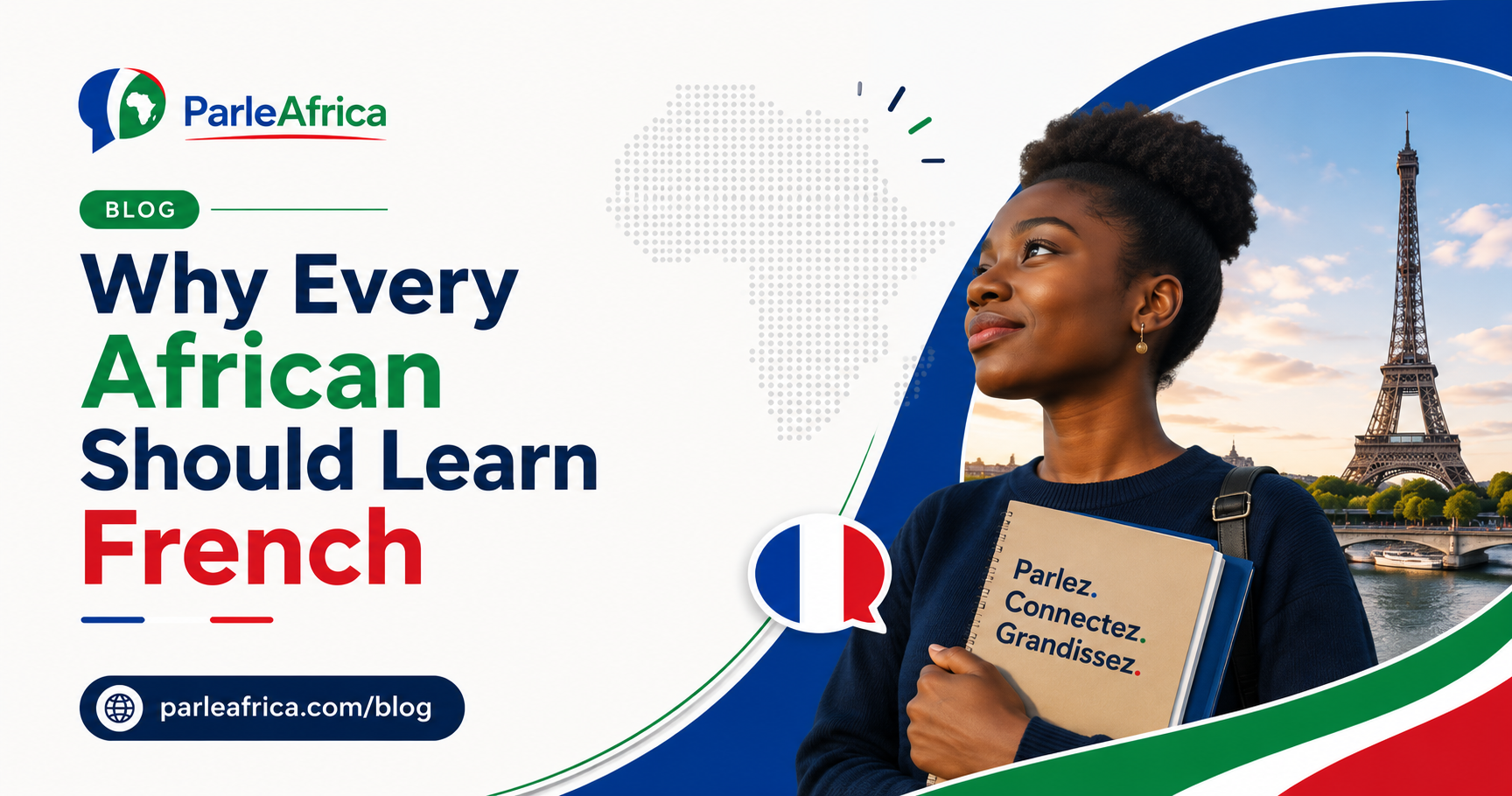
Why Every African Should Learn French
French is spoken by over 400 million people worldwide — and Africa is home to the majority of them. Here's why learning French is one of the best investments you can make.
French is not a European language. Not anymore. With over 400 million speakers globally, more than half of them live in Africa — and that number is growing every single year. Yet millions of Africans still treat French as a foreign language, something distant and difficult, belonging to someone else. That mindset is costing us opportunities we don't even know we're missing.
This article is about why French is one of the most strategic investments any African can make — not just for career reasons, but for identity, connection, and the future of the continent itself.
Africa is the Future of French
By 2050, demographers estimate that over 85% of all French speakers in the world will be African. Let that sink in. The language that most people associate with berets and baguettes will, within a generation, be predominantly spoken by Africans — in Lagos markets, Nairobi boardrooms, Kinshasa universities, and Dakar streets.
Countries like Nigeria, Ghana, and Ethiopia — which are not traditionally Francophone — are already seeing a massive surge in French learners. The reason is simple: people are waking up to opportunity. French is no longer something you learn to impress people. It is something you learn to compete.
The Economic Case is Overwhelming
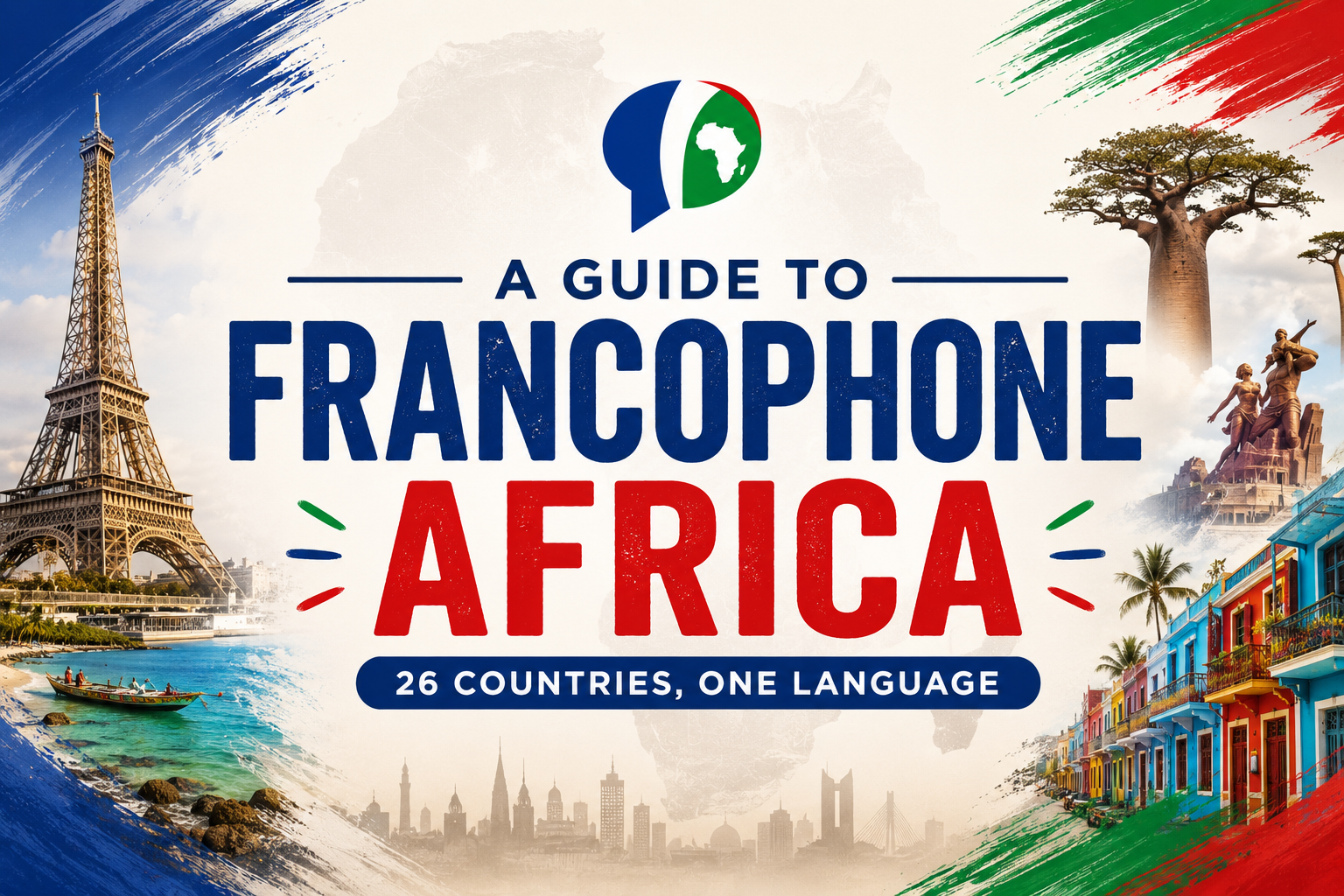
The African Continental Free Trade Area (AfCFTA) is the largest free trade area in the world by number of participating countries — 54 nations. Of those, 26 are Francophone. That means if you speak only English, you are effectively locked out of more than half of the continent's trade relationships before the conversation even begins.
Think about what that means in practice. A Nigerian entrepreneur trying to expand into Côte d'Ivoire, Senegal, or the DRC faces an immediate language barrier. A Ghanaian professional applying for a role at the African Union or ECOWAS is competing against candidates who speak both English and French. A Kenyan NGO worker trying to operate in Burkina Faso or Mali is dependent on translators for every meeting.
- Access to 26 Francophone African markets with a combined GDP of over $1 trillion
- Competitive edge in international organisations — the UN, AU, ECOWAS, and World Bank all use French as a working language
- Higher earning potential in diplomacy, international trade, development finance, and NGO sectors
- Ability to live and work in countries like Côte d'Ivoire, Senegal, DRC, Rwanda, and Cameroon
- Access to French government scholarships (Campus France) and European opportunities that require French proficiency
French fluency doesn't just open doors — it puts you in rooms that most people don't even know exist.
French is Already Around You
If you are Nigerian, you share a border with three Francophone countries — Benin, Niger, and Cameroon. Traders, travellers, and professionals cross these borders every single day. The markets at Seme Border, the truck drivers heading to Niamey, the businesspeople flying into Douala — French is not exotic to them. It is practical. It is money.
Even within Nigeria, French is increasingly present. The government has made French a compulsory subject in secondary schools. Major Nigerian companies with regional ambitions are actively seeking French-speaking staff. The demand is real, and the supply of truly fluent French speakers is still very low. That gap is your opportunity.
The Career Advantage Nobody Talks About
In most Nigerian and West African job markets, English fluency is assumed. Everyone has it. It no longer differentiates you. But French? French immediately sets you apart. It signals that you are serious about the continent, that you think beyond your immediate environment, that you have invested in yourself in a way most people haven't.
Sectors where French fluency gives you a direct edge include:
- Diplomacy and international relations — French is one of the six official UN languages and is required for many diplomatic postings across Africa
- Banking and finance — Major pan-African banks like Ecobank, UBA, and Société Générale operate across Francophone Africa and need bilingual staff
- Oil and gas — Gabon, Congo, Cameroon, and Chad are significant oil producers. French is essential for operations in these countries
- Development and humanitarian work — The majority of UNHCR, UNICEF, and World Food Programme operations in Africa are in Francophone countries
- Media and journalism — Pan-African media outlets like RFI, TV5Monde, and Jeune Afrique reach hundreds of millions of people in French
The Cultural Connection
Beyond economics, there is something deeper. African French is not Parisian French. It has its own rhythm, its own expressions, its own soul. The French spoken in Abidjan has a musicality that Paris doesn't have. The French of Kinshasa carries the weight of a city of 17 million people. The French of Dakar is infused with Wolof warmth and hospitality.
When you learn French as an African, you are not imitating Europe. You are claiming a language that has been shaped by African mouths, African stories, and African experiences for generations. You are joining a conversation that is already yours.
African literature in French is extraordinary — Chinua Achebe's contemporaries like Léopold Sédar Senghor, Mariama Bâ, Ahmadou Kourouma, and Alain Mabanckou wrote in French and produced some of the most powerful literature of the 20th century. Learning French means accessing that world directly, without translation.
French and the Pan-African Vision
There is a political dimension to this too. One of the great ironies of African unity is that the continent is divided by the languages of its former colonisers. Anglophone and Francophone Africans often struggle to communicate with each other despite sharing borders, cultures, and histories. Every African who learns French is, in a small but real way, bridging that divide.
The vision of a truly united Africa — economically integrated, politically coordinated, culturally connected — requires Africans who can speak across those linguistic lines. French is not a colonial relic to be rejected. It is a tool to be mastered and made our own.
The Myth That French is Too Hard
Many Africans avoid French because they tried it in secondary school, found it confusing, and concluded they simply weren't language people. That experience says nothing about your ability and everything about how French was taught — through rote memorisation, grammar drills, and zero real conversation.
French is not harder than any other language. It has its quirks — gendered nouns, silent letters, verb conjugations — but so does every language. The difference is method. When you learn French through real conversation, through community, through content that is relevant to your life, it stops feeling like a subject and starts feeling like a skill.
At ParleAfrica, we built the platform specifically for Africans learning French. Our community speaks in Pidgin, English, and French — because that is how we actually talk. Our lessons are grounded in African contexts. Our approach is practical, not academic.
Where to Start
The best place to start is not a textbook. It is a conversation. Find one person who speaks French — a colleague, a neighbour, a friend — and start talking. Make mistakes. Ask questions. Look foolish. That is how language is learned.
Supplement that with structured lessons, daily vocabulary practice, and immersion in French content — music, films, podcasts, news. Set a small daily goal: ten minutes, five new words, one sentence written in French. Consistency over intensity, every time.
And join a community. Language learning is social. The ParleAfrica community exists precisely for this — a space where Africans learn French together, encourage each other, and celebrate progress at every level.
Start your journey today. The continent is waiting for people who can speak across its borders. Be one of them.
Did you enjoy this article?
Tap ❤️ to like or 🔥 to superlike
More articles
Practice what you just learned
Join the ParleAfrica community and speak French with real Africans.
Join for free